You felt it before you saw it, didn’t you? That hush that arrives when the forest listens. The way birds pause mid-sentence. The way wind seems to slow, as if it doesn’t want to be noticed.
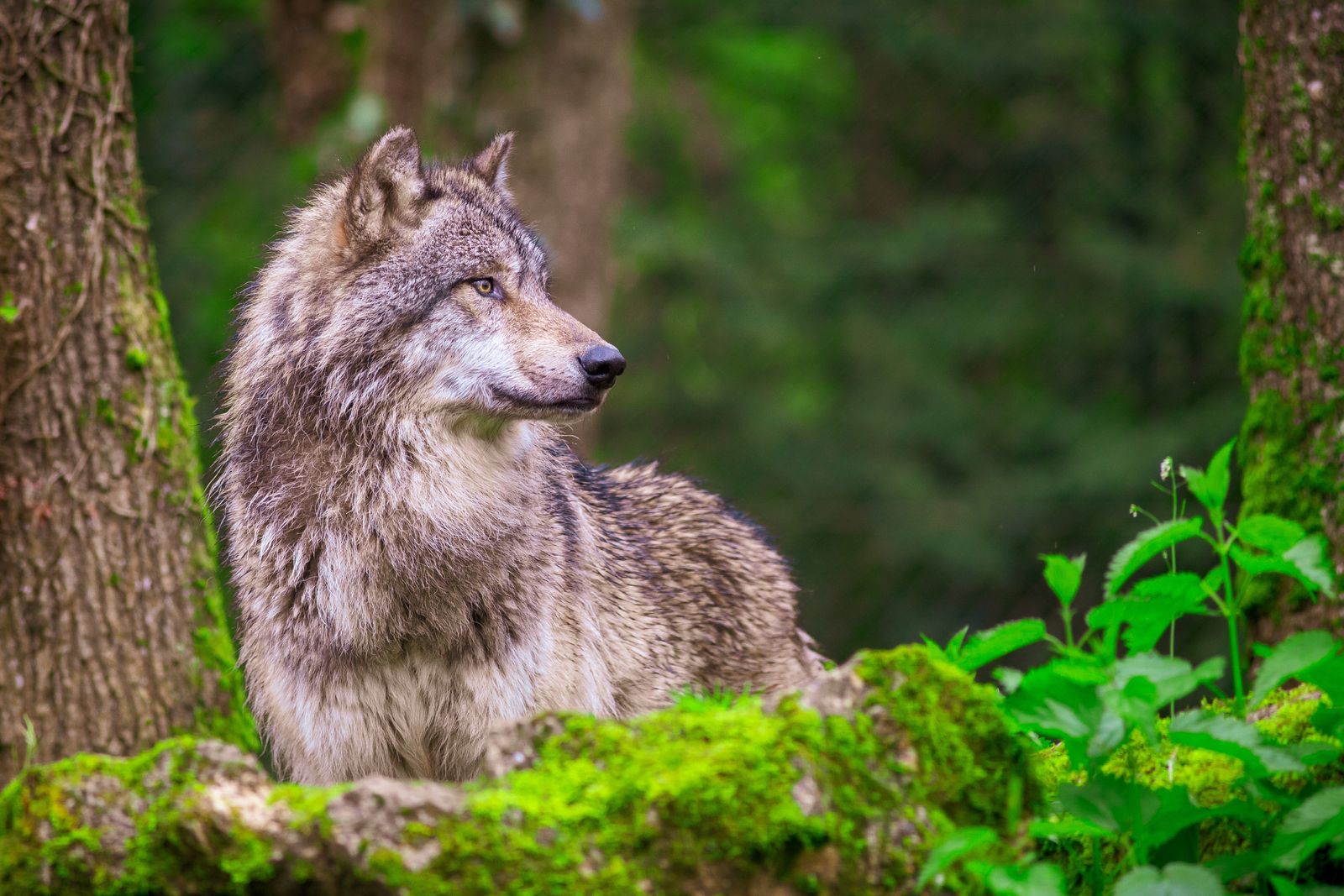
I am the Wolf (Canis lupus). Not a monster, not a myth - though humans have dressed me in both for a very long time. I am simply a wild animal shaped by family, distance, and the patient mathematics of survival.
Walk with me, and I’ll tell you what it means to live as a thread in the living web.
A Wolf’s Life
My world is made of territory and trust.
Wolves live across a wide range of habitats - forests, mountains, tundra, and open plains - wherever there’s enough space, enough prey, and enough quiet to raise our young. We are built for travel. Long legs. Deep chest. A body made to move - sometimes many miles in a single night - without needing applause for it.
And no, I do not live alone by nature.
A wolf’s strength is not loudness. It is relationship. We often live in family groups called packs - usually a breeding pair and their offspring of different ages. It isn’t an army. It’s a household. A moving, learning, hunting family.
We communicate constantly: Through scent on the wind, pawprints in soft ground, tail and ear signals, and voices that carry far.
When you hear a howl, don’t imagine a creature celebrating darkness. Imagine a family keeping track of one another across a vast, complicated home.
Not Your Average Predator
Some think I am defined only by my teeth. But my real tools are patience and understanding.
Hunting is not endless violence. It is decision-making under pressure - reading the herd, the weather, the terrain, the energy cost of pursuit. Wolves often take prey that is older, weaker, or less able to escape. It isn’t “cruel.” It is how natural systems keep moving, how populations stay healthier across time.
And in places where wolves return after being absent, something remarkable can happen: prey animals may change how and where they graze, allowing young trees and riverbank plants a chance to grow again. More cover can mean more birds, more insects, more life along the water’s edge.
Nature is not a straight line. It’s a chain of quiet consequences.
Let Me Introduce You to My Cousins
My family stretches wide across the world - some relatives wild, some living closely beside humans. Here are a few you might recognise.
The Coyote - Lighter-footed and highly adaptable. Coyotes thrive in open landscapes and can live surprisingly close to human places, learning quickly and adjusting to change with sharp intelligence.
The Golden Jackal - A traveler of warmer regions, often found in parts of Europe, Asia, and Africa. Smaller than me, with a quick, watchful way of moving through grasslands, farmland edges, and scrub.
The African Wild Dog - Not a “wolf” at all, but a distant canid cousin with striking patterns and extraordinary teamwork. They are among the most effective hunters on Earth - and also among the most threatened.
The Red Fox - A solitary, silent passer-by in many landscapes, slipping through hedges and twilight. Foxes don’t live as we do, but they share that clever canid ability to read the world and make do.
Different lives, different strategies - same shared ancestry humming underneath.
A Shared Thread
Here is the truth I wish more humans carried gently:
I do not want your world. I want my own.
Conflict happens when wild spaces shrink, when prey becomes scarce, when fear fills the gaps where knowledge should be. Wolves need habitat, prey, and the chance to live without constant pressure. Where wolves and people share landscapes, the best outcomes come from practical protection of livestock, clear information, and a willingness to replace old stories with accurate ones.
If you care about balance - about biodiversity - care about the space that allows it.
Thank you for walking with me. If you ever find my tracks and feel your breath catch, let it be wonder first. Not fear.
With steady eyes and an old rhythm in my chest, Wolf