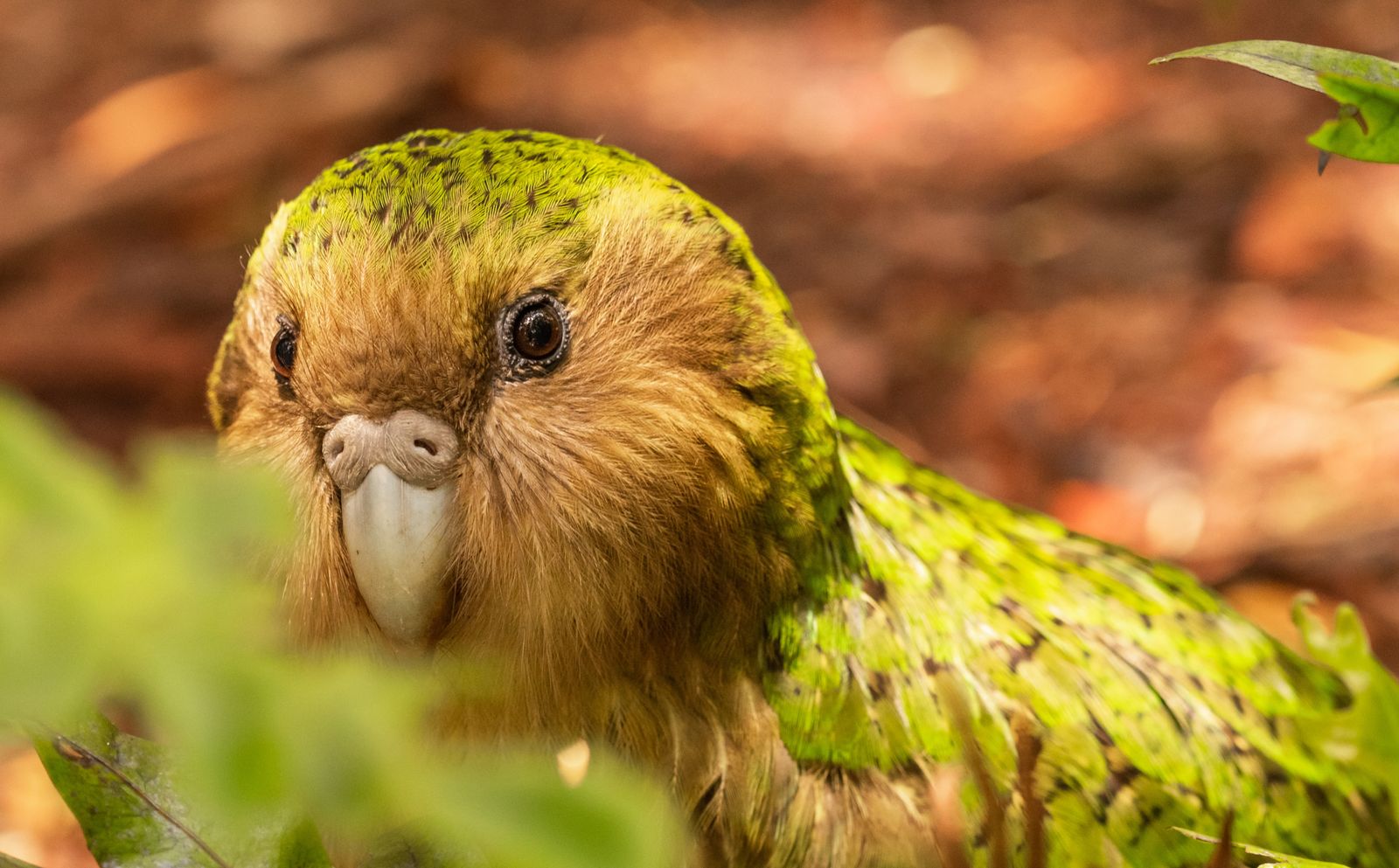
More than a century can pass in a life like mine, and that, truth be told, is unusual for a bird. I am a kakapo - heavy-bodied, moss-green, soft-feathered, and made for the hush of New Zealand’s night forests. If you’ve come looking for speed or sharp cries in the sky, you won’t find them here. I do not fly. I walk, climb, and wait. And in that quiet way, The Oldest Bird in the World: the Kakapo has become one of nature’s strangest and most unforgettable survivors.
Life Close to the Forest Floor
My world is low to the ground, where roots twist through damp soil and leaves hold the day’s cool breath. By night, I shuffle out to feed on shoots, seeds, fruit, and native plants. I’m a herbivore, nibbling slowly, sometimes climbing trees with surprising skill before gliding clumsily back down. Funny, isn’t it? A parrot that cannot truly fly, yet still lives among branches and shadow.
I am solitary by nature, and for long stretches I prefer stillness. My feathers smell faintly sweet, almost like earth and honey, though that lovely scent has not always helped me. On islands where mammals arrived, it made me easier to find.
A Bird Built for Silence
There are many remarkable things about me, but one stands out straightaway: I am the world’s only flightless parrot. I am also one of the heaviest parrots alive, and among the longest-lived. So when people speak of the oldest bird in the world: the Kakapo, they are really speaking of endurance - of a bird shaped by an ancient land without mammalian predators.
During breeding years, the males perform a deep booming call that rolls through the night like distant drums. It can travel for kilometres. The females, careful as ever, follow the sound and choose. We do not breed often; we wait for the heavy fruiting of certain trees, especially rimu. In lean years, there may be no chicks at all.
When the Forest Changed
And then, of course, came the hardest part of my story. Cats, rats, stoats, and people altered the rhythm of the forest. I had evolved to freeze when danger came. Against keen noses and fast paws, that old strategy failed. My numbers fell terribly low.
Yet I am still here. Conservation teams monitor us closely, protect predator-free islands, support breeding, and even name many of us as individuals. It’s careful, hands-on work - patient, expensive, deeply human work at its best. Without it, the Kakapo might already be only a memory.
The Slow Return of Hope
So I remain: a green shadow in fernlight, ancient in my habits, vulnerable still, but not forgotten. If you remember me, remember this gently - survival is not always loud. Sometimes it looks like a bird on the forest floor, living slowly, breeding rarely, and holding on because others chose to care.
And perhaps that is enough to begin with: attention, wonder, and the quiet decision to protect what still breathes beside us.