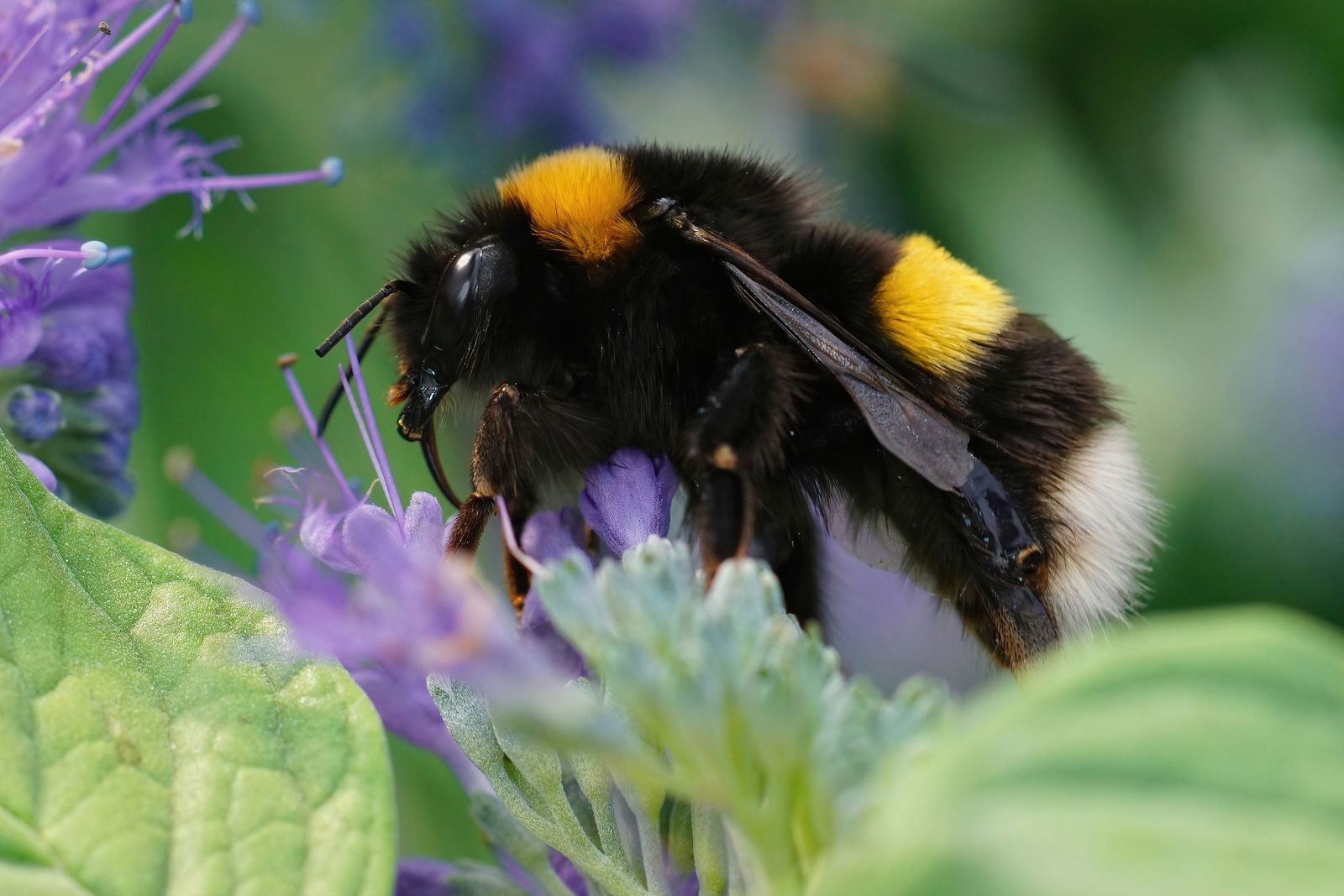
At first light, when the air still holds the night’s cool edge, I leave the grass where I rested and test my wings. The garden is quiet then, except for blackbirds in the hedge and the faint rattle of seed pods. I am Brambles, a bumblebee, built for weather that would slow smaller pollinators. With a thick coat and a steady beat of wing, I can work in dim mornings, nosing into foxgloves, comfrey, and open blackberry bloom while dew still clings to the petals.
Among Clover and Beans
I do not garden with tools. I garden by moving. Pollen gathers on my hairs as I push into flowers for nectar, the sugar fuel that keeps my flight warm and constant. Some blossoms are shaped for insects like me, sturdy and deep, and I visit them again and again, following scent, color, and memory. In bean flowers and tomatoes, I grip tight and buzz at just the right pitch, shaking loose pollen in a way few others can. Quietly, almost by accident, seeds and fruits begin.
By midsummer, the paths between flower beds grow busier. I share them with hoverflies, solitary bees, butterflies, and wasps. Still, it’s a risky world. A sudden downpour can pin me under a leaf. A hungry spider waits where petals narrow. Worst of all, now and then, I cross a place where every bloom looks bright but carries little food, or where the scent of chemicals hangs sharp in the heat.
When the Ground Hums
My nest is low, often tucked into old mouse runs or dry hollows hidden by grass. We do not last as a colony forever. New queens must feed well, survive summer’s end, and find a safe place to wait through winter cold. That is why long-flowering patches matter so much, and why tangled corners, native plants, and unmown edges can feel as rich as orchards.
So when you see me drift low over thyme, then lift toward the bramble arch, you are watching more than a small creature at work. You are seeing a living thread in the garden’s making, carrying gold dust from bloom to bloom, while the whole place, slowly and surely, answers back.